Frameworks
Over time I began to notice that many difficult institutional decisions follow similar patterns.
Policy may exist, but interpretation is still required.
Leaders must weigh fairness, precedent and responsibility.
Small decisions can quietly shape institutional signals over time.
The frameworks below are simply ways of making those patterns easier to see.
They are not rigid tools. Rather, they offer a way of thinking about situations where governance, leadership judgement and organisational responsibility intersect.
They are often useful for people working in governance, academic standards, assessment, regulatory oversight or senior leadership roles. 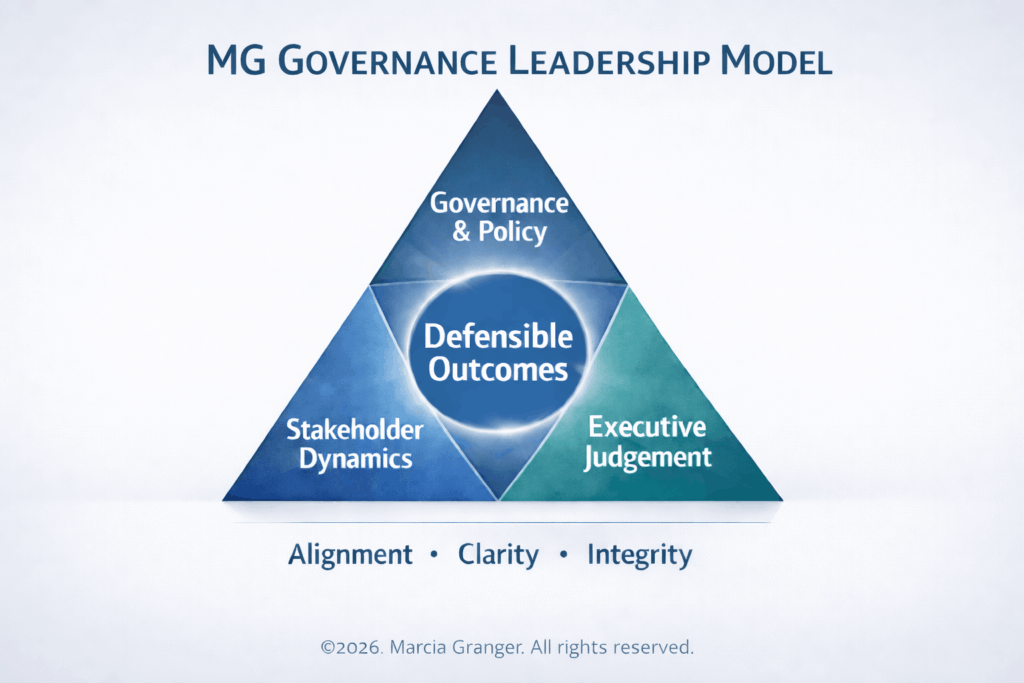 This model explores the relationship between clarity in decision-making and the signals institutions send over time.
Individual decisions rarely remain isolated. They influence expectations, precedent and institutional trust.
When decisions are clear and consistent, institutions reinforce fairness and confidence in their standards.
When clarity disappears, uncertainty begins to grow.
This model is often useful when:
- Examining how institutional decisions influence precedent over time
- Reviewing how governance processes maintain consistency
- Reflecting on how clarity affects institutional trust
People working in academic governance, registry, academic standards and quality assurance often find this model helpful. 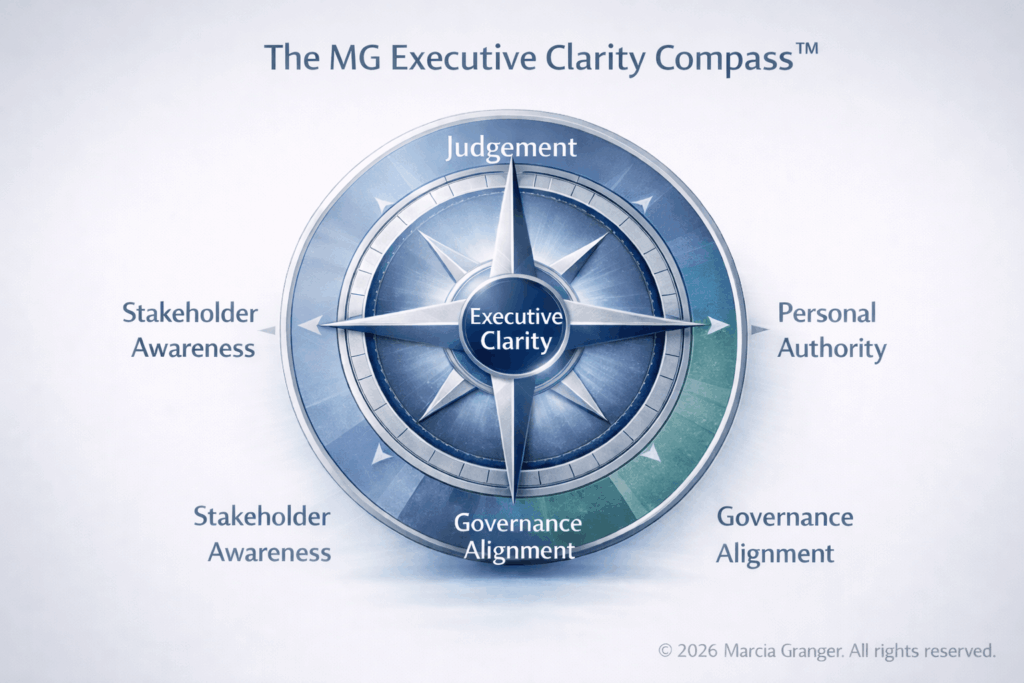 Leaders frequently face situations where the correct direction is not immediately obvious.
Policy may offer guidance, but real situations often involve competing pressures — organisational expectations, professional judgement and institutional responsibility.
The Executive Clarity Compass helps leaders pause and examine the different forces shaping a decision before choosing a direction.
This model is often useful when:
- Leaders are navigating complex or high-pressure decisions
- Competing priorities make direction difficult to determine
- Leaders want to step back and examine a situation more clearly
Senior leaders, board members and executives working in complex institutions often find this model valuable. 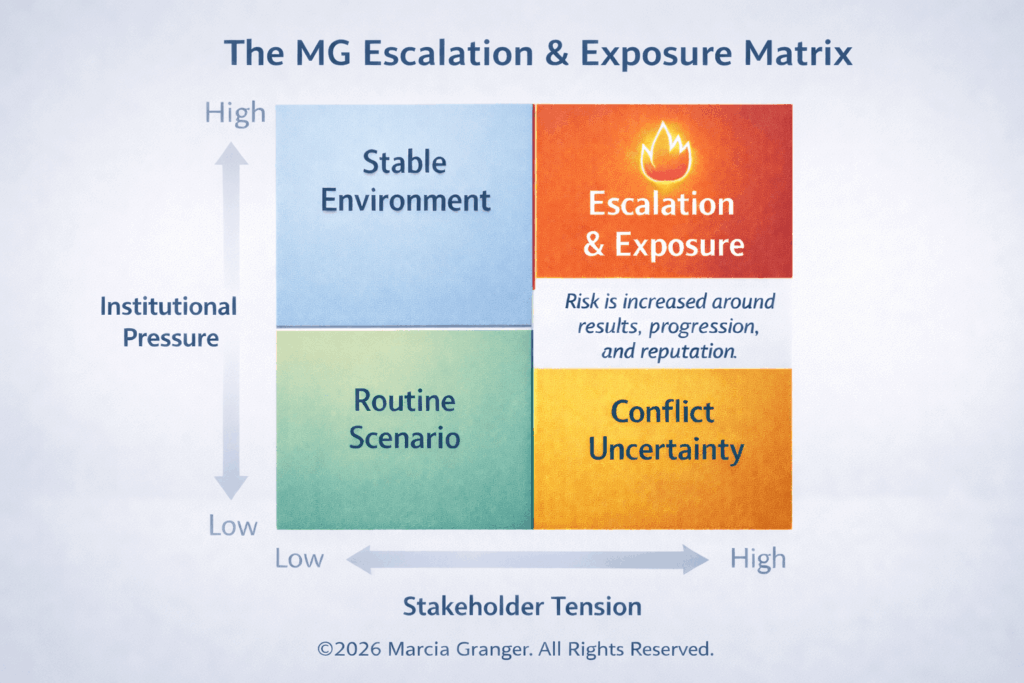 Many organisational issues do not escalate suddenly. They build gradually.
Small concerns may be ignored, misunderstood or quietly tolerated until they eventually surface in a more visible and disruptive way.
The Escalation & Exposure Matrix helps leaders understand how issues move from internal concern to public exposure, and where earlier intervention might have changed the outcome.
This model is often useful when:
- organisations want to understand how issues escalate
- leaders are managing reputational or governance risks
- institutions are reviewing how concerns are raised and addressed
Leaders responsible for governance, organisational oversight or institutional accountability often find this framework particularly helpful. 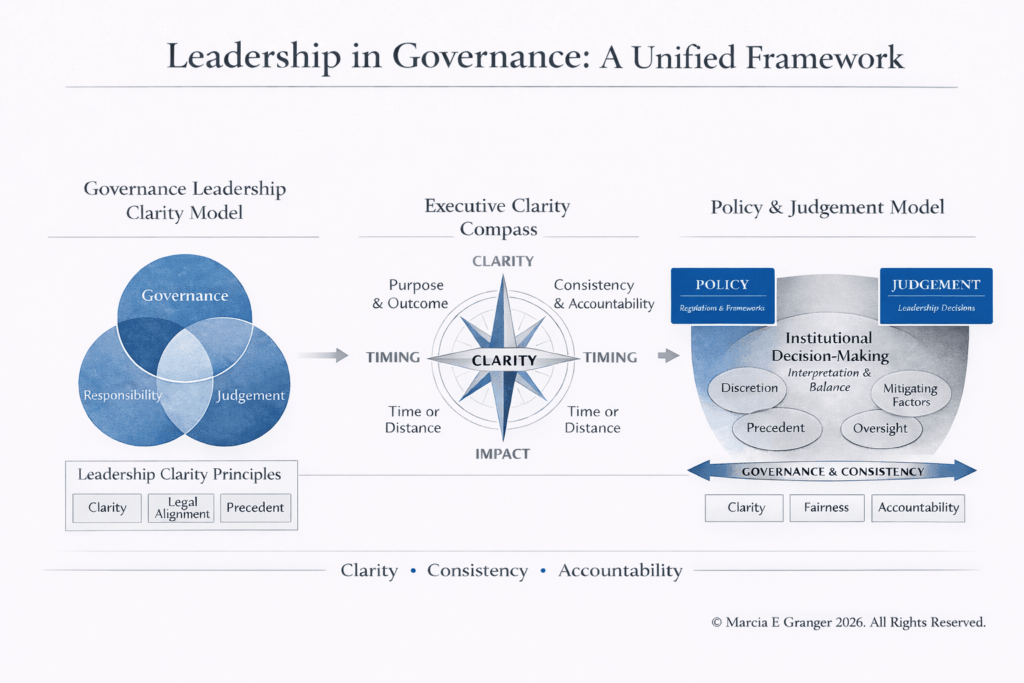 A practical framework for aligning governance, executive clarity and institutional decision-making to ensure consistent, accountable leadership.
These frameworks simply offer a way of thinking more clearly about the difficult decisions institutions face.
Explore Insights